Club Backrooms
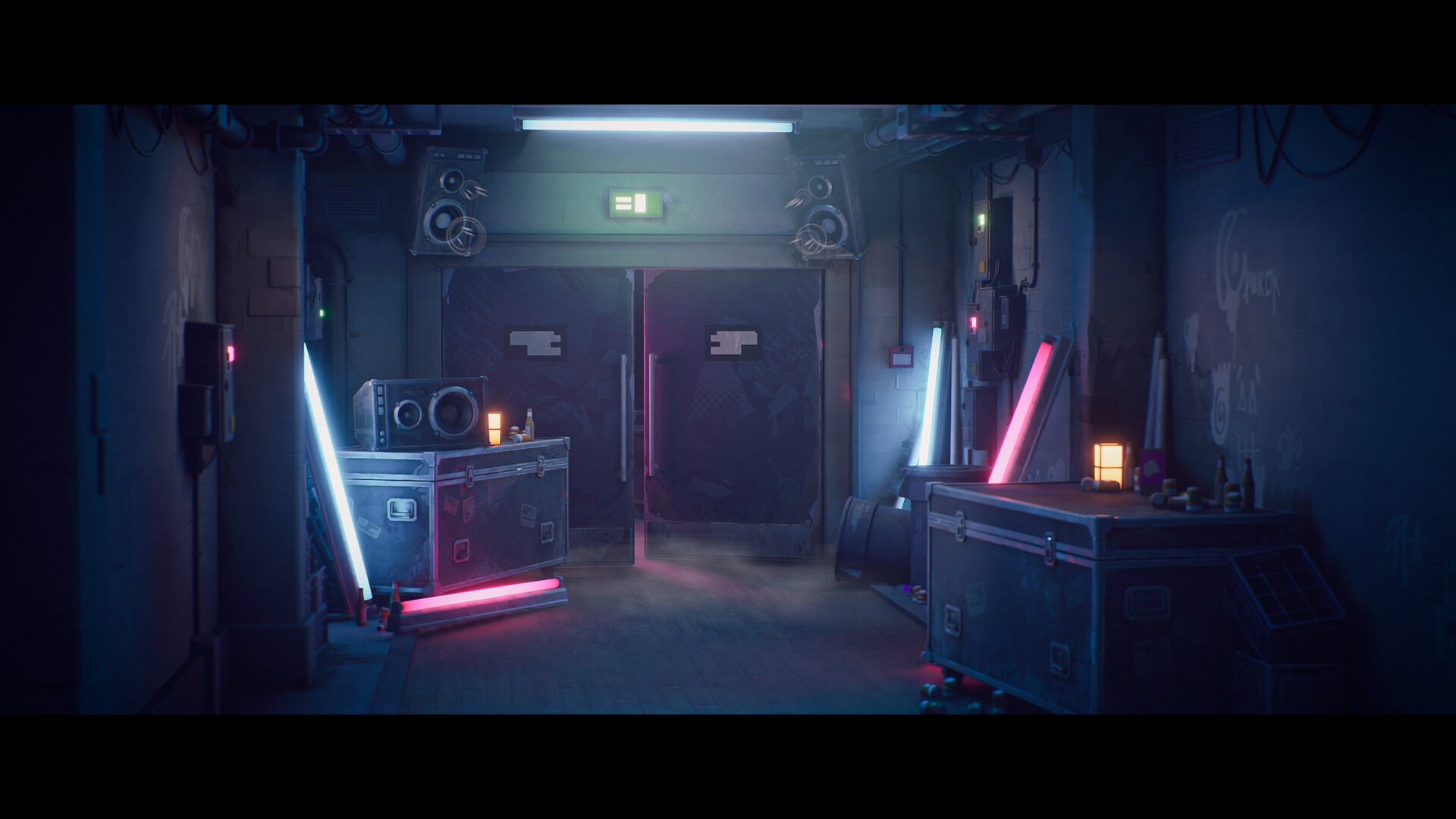
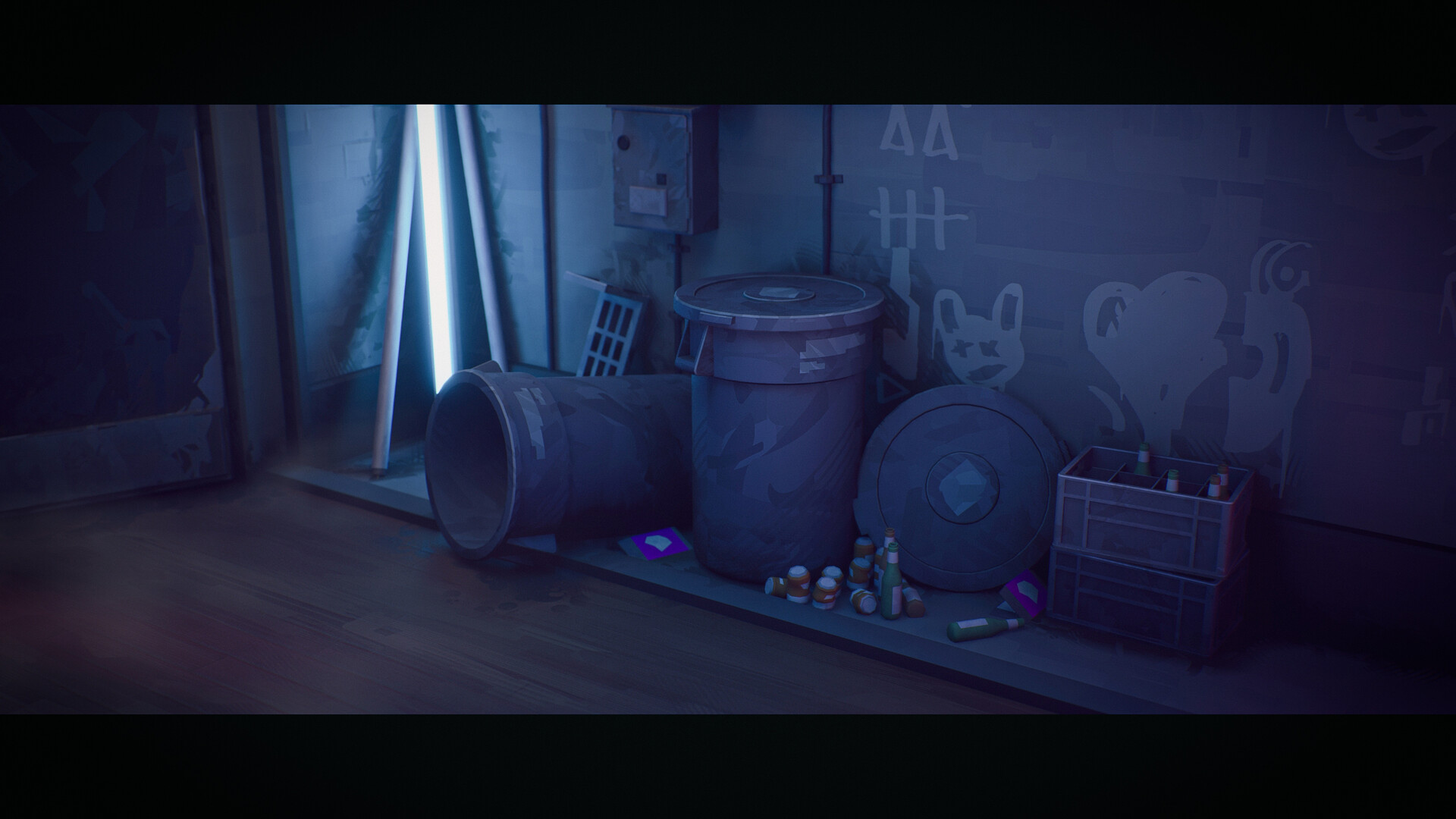
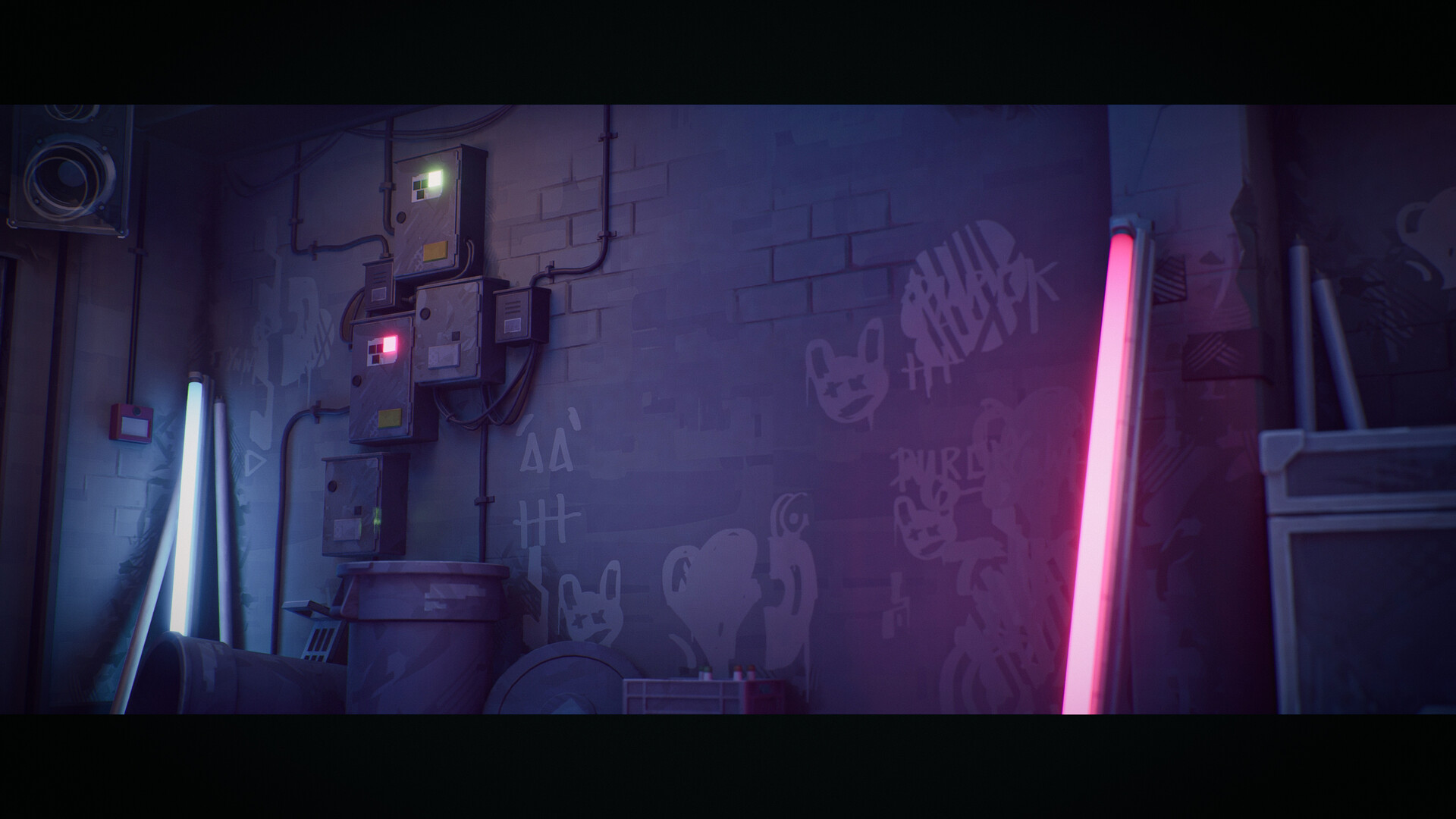
I was massively inspired by Sifu after playing it some months back, it's one of the most aesthetically striking games I've played. I found a GDC presentation given by one of their artists where they gave a good breakdown of their techniques, so I learned from that and elaborated on it to introduce some of my own style and technical ideas.
It was fun to approach this with a different workflow from what I've experienced previously, and I found that it's quite an efficient and sustainable approach for creating art in my style.



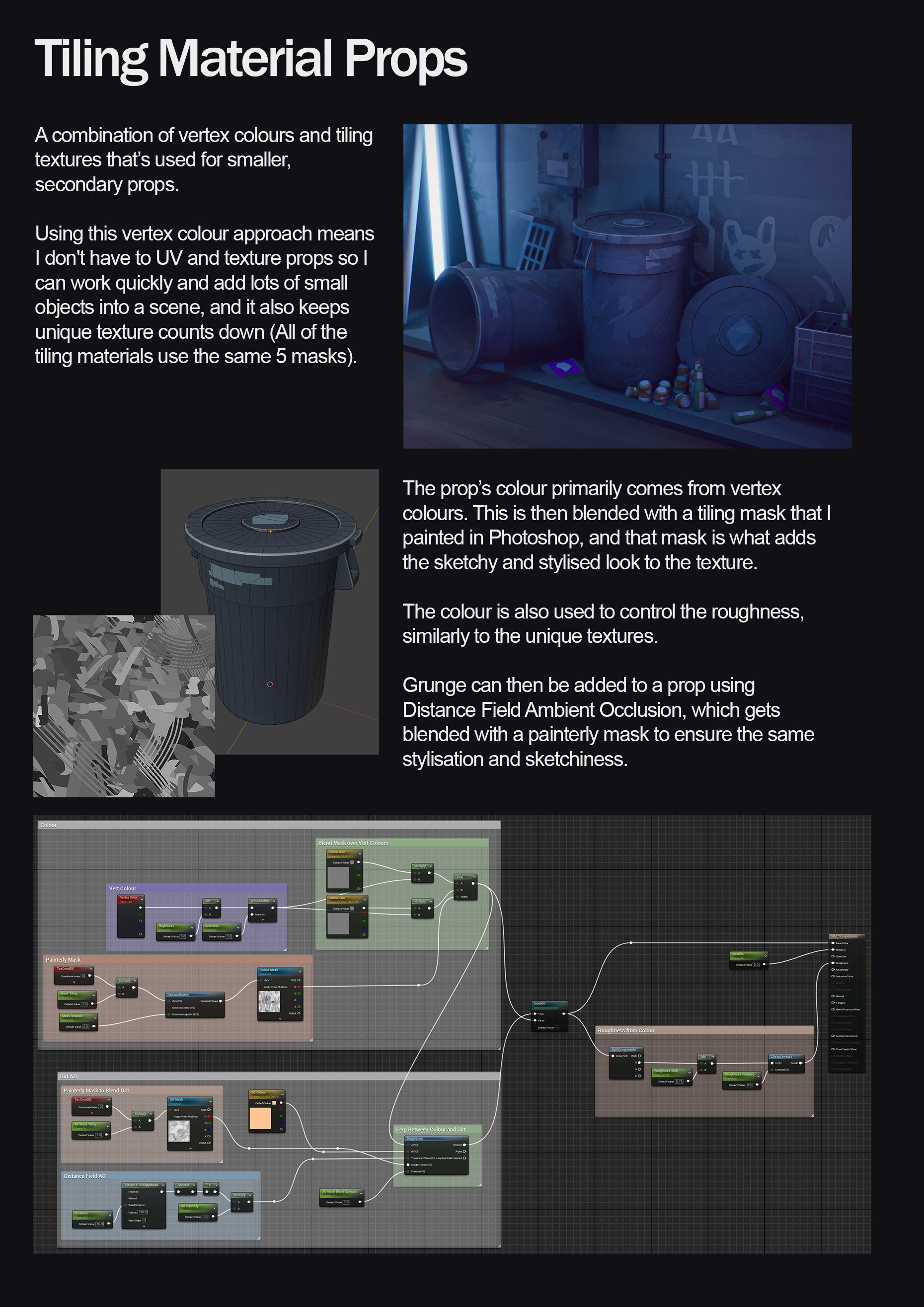

Painterly tiling masks that were used in the tiling shaders. Painted in Photoshop.


Asset library.

Painted texture maps for the door, flight case, and speakers (left to right). All created in Substance Painter.

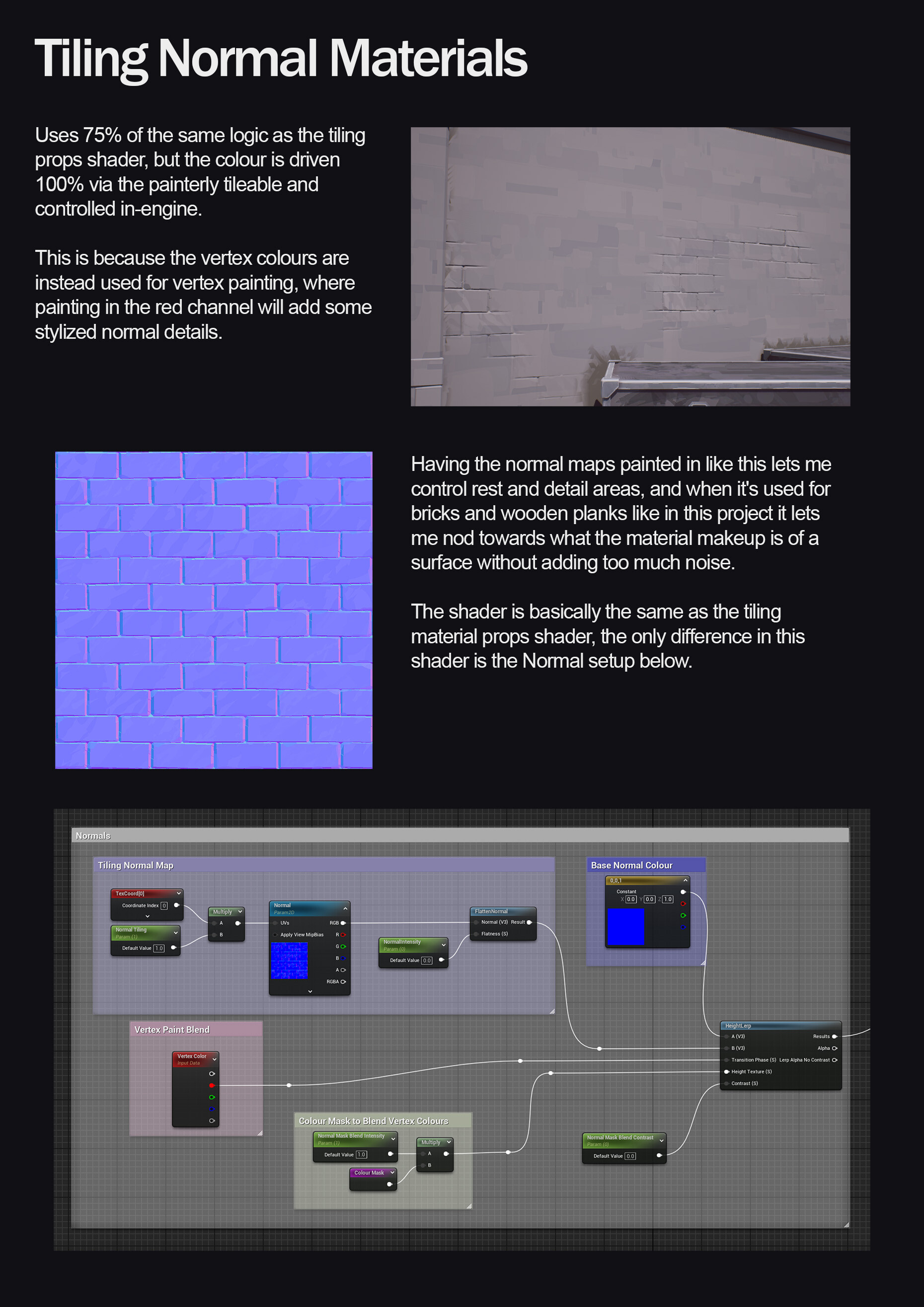
Normal maps created in Substance Designer. These are kept quite simple to reduce noise, and the focus is on bold and sharp shapes for edge wear and chipping etc.
Vertex painting in some wooden floorboard normal details.
Editing the light tube UVs to adjust the gradient's values. Being able to do this without having to leave the engine is super efficient.
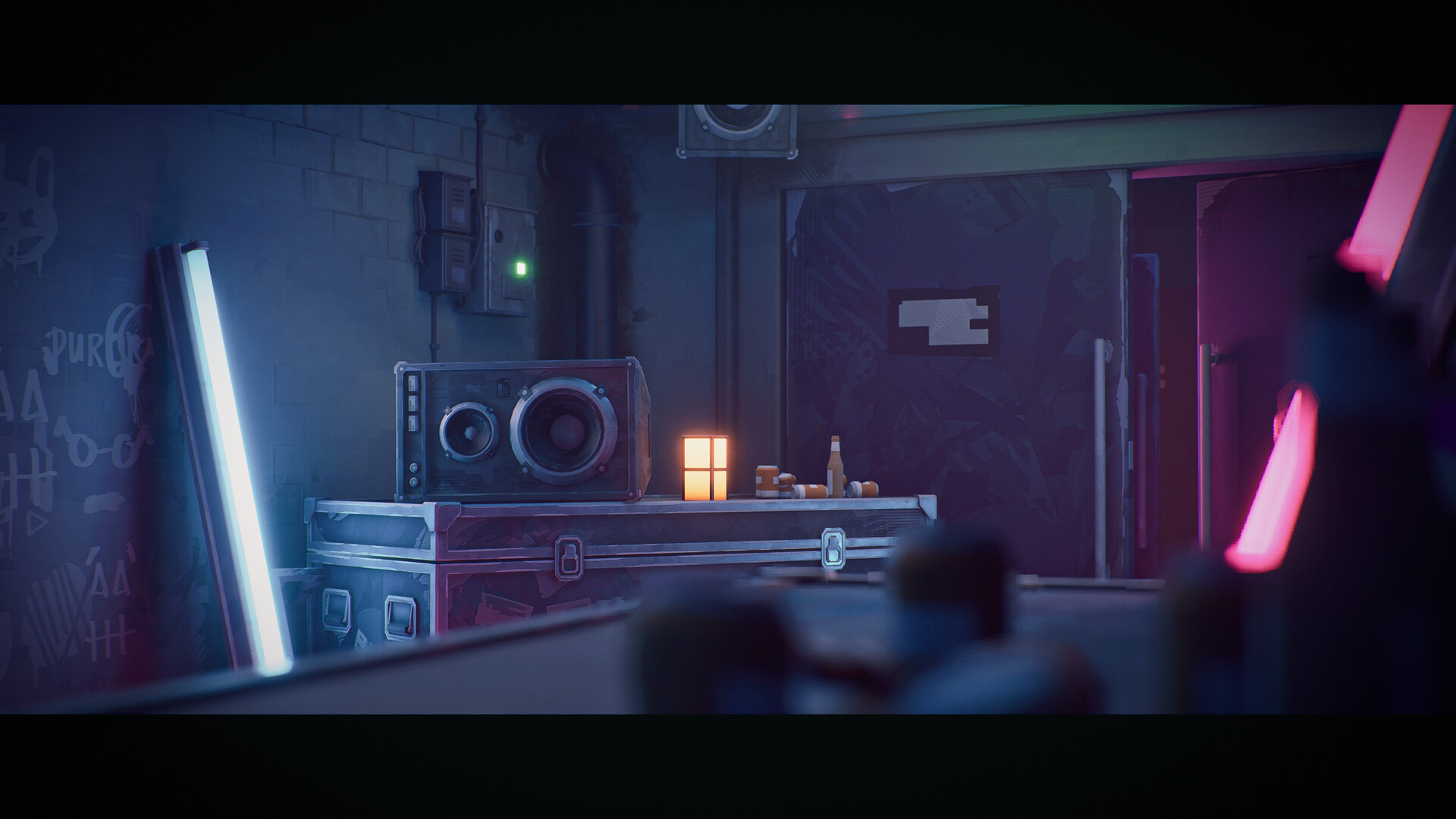
VFX particle systems were made using Niagara, all using a single material and a single texture. The speaker bumping was done using vertex animation, with a simple offset sine wave.
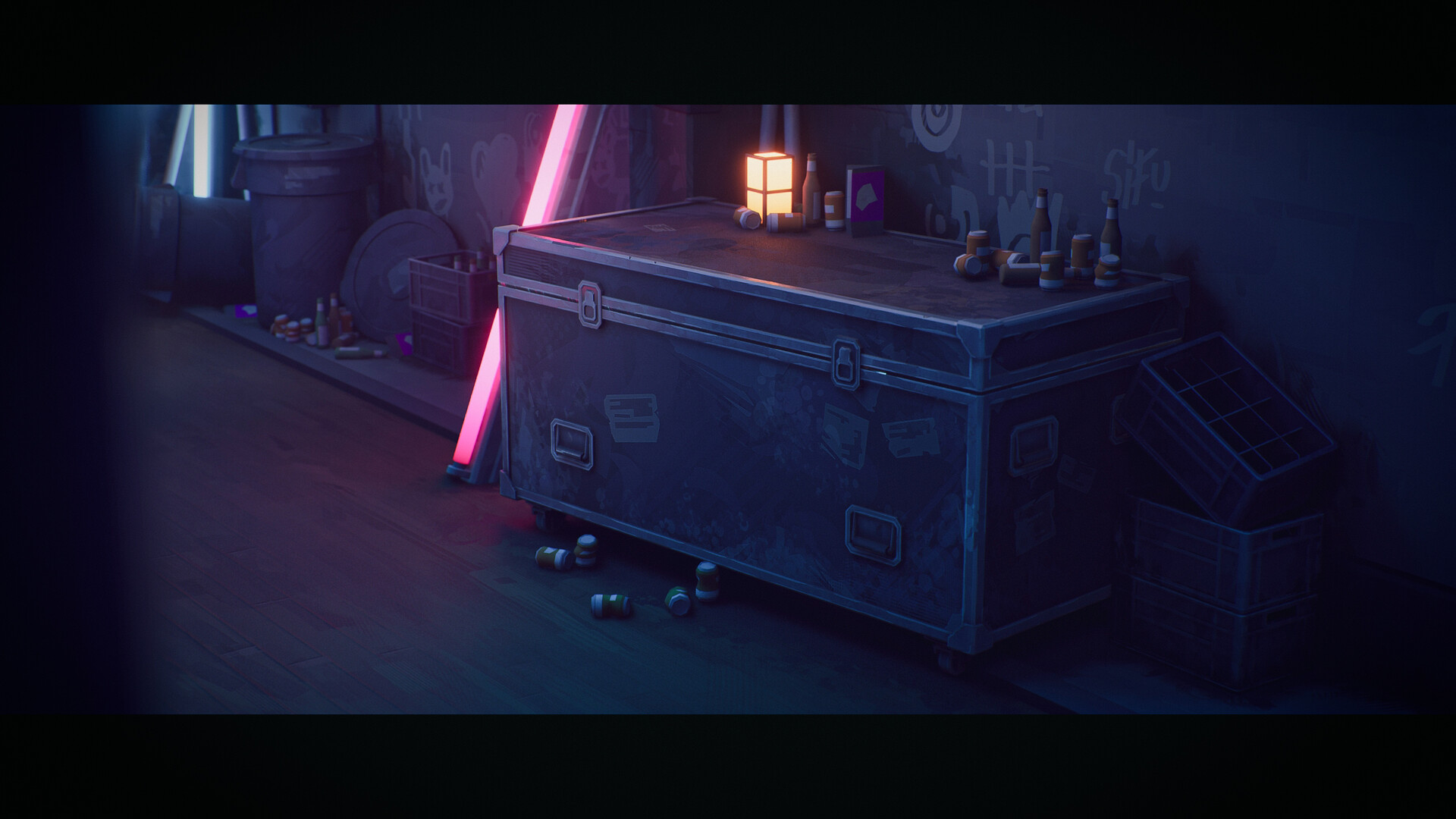
A blueprint tool I made to lay out some clutter props into little piles. Makes small props more efficient to work with and is slightly more performant due to mesh instancing.
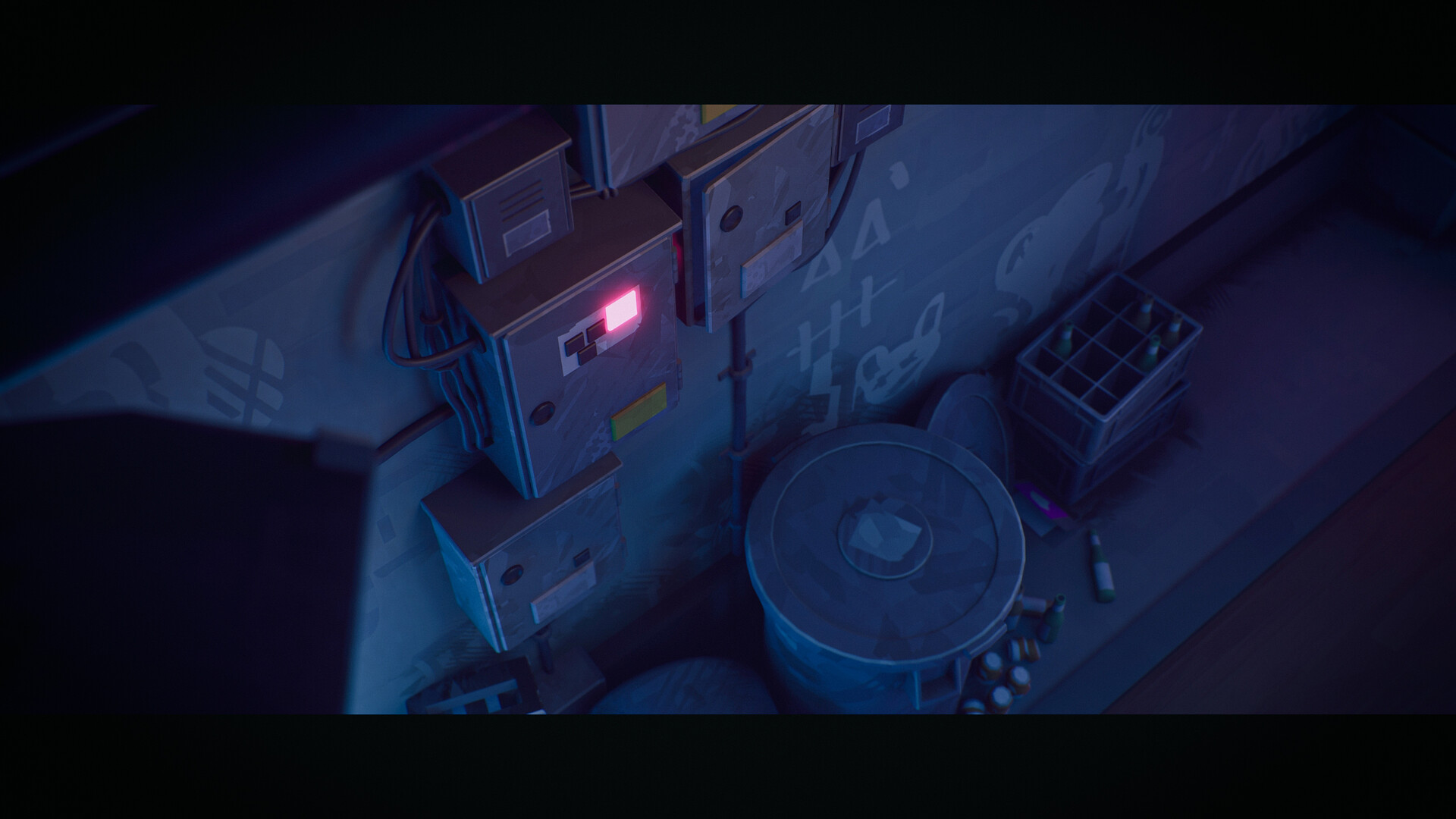
A system I made using geometry nodes in Blender to lay out cables procedurally for the wall boxes. This was my first foray into geo nodes, and whilst it's not perfect it was quite a successful tool for laying out more intricate configurations.
Blockout progress.